--%>

Output at unitary price elasticity demand curve

Babble-On maintains world-wide patents for software which translates any of 314 spoken languages into text, along with automatic audio and text translations into some of the other three-hundred-thirteen languages. Facing Babble-On the demand curve has unitary price elasticity at: (1) output q1. (2) output q3. (3) output q4. (4) output q6. (5) output q7.
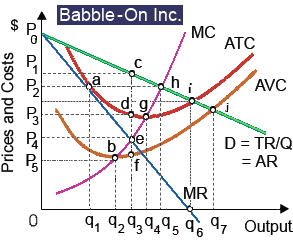
895_Market Power.png

Can anybody suggest me the proper explanation for given problem regarding Economics generally?

   Related Questions in Microeconomics

  • Q : Functions of Profits and Losses The

    The functions of profits into a market economy do NOT comprise: (1) stimulation for firms to be innovative and efficient. (2) compensating savers for delays of consumption. (3) signaling changing business conditions. (4) inducing mimi

  • Q : Find out marginal cost curve

    LoCalLoCarbo has turn into the favorite of fad dieters. Therefore in illustrated figure there curve C shows: (1) LoCalLoCarbo’s marginal cost curve. (2) LoCalLoCarbo’s average variable cost curve. (3) LoCalLoCarbo’s average total cost curve. (4) the

  • Q : Analytic time of corn harvest The

    The period after one corn harvest is done and before the subsequent corn harvest begins is the: (1) short-run. (2) intermediate period. (3) long-run. (4) market period. (5) fiscal year for budgeting. Can someone explain/help me wit

  • Q : Coefficient of price elasticity Why the

    Why the coefficient of price elasticity of demand is is negative?

  • Q : Characteristics of a purely competitive

    NOT between characteristics of a purely competitive industry would be as: (w) large numbers of potential buyers and sellers. (x) long-run freedom of entry and exit. (y) modern technology that dictates large firms. (z) buyers have no influence on price

  • Q : Determine total revenue when prices fall

    As the price falls by P4 to P3 to P2 to P1 beside such demand curve for Pixie's cheesy fried grits, then total revenue: (w) always rises. (x) always falls. (y) rises then falls. (z) falls then rises.

    Q : Unite to form cartels and share

    Oligopolies which unite to form cartels and share monopoly profits give an illustration of: (i) collusive behavior. (ii) territorial imperatives. (iii) mergers and acquisitions. (iv) non-collusive strategy. (v) corporate raiding.

  • Q : Monopsonistic firms-Pay lower wages I

    I have a problem in economics on Monopsonistic firms-Pay lower wages. Please help me in the following question. Relative to the firms hiring in a competitive labor market, the monopsonistic firms tend to: (1) Hire more workers. (2) Hire labor up to a

  • Q : Break-even level of income under

    For a family of four the break-even level of income under the negative income tax system demonstrated in this figure is: (1) $15,000 per year. (2) $30,000 per year. (3) $45,000 per year. (4) $60,000 per year. (5) $75,000 per year.

  • Q : Least likely monopsony power Which of

    Which of the given below employers is LEAST likely to encompass monopsony power? (1) The secretarial service firm in the Los Angeles. (2) The police force in Eau Claire, Wisconsin. (3) U.S. Department of Defense. (4) Wal-Mart in the Snowflake, Arizona. (5) Community h