--%>

Maximizes profit for output

HoloIMAGine has patented a holographic technology which creates 3-D photography obtainable to consumers. It maximizes profit at: (i) output q1. (ii) output q2. (iii) output q3. (iv) output q4. (v) output q5.
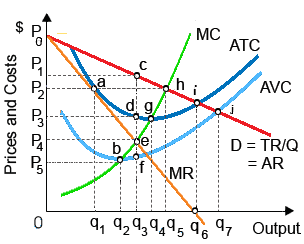
1928_Market Power1.png

How can I solve my Economics problem? Please suggest me the correct answer.

   Related Questions in Microeconomics

  • Q : Best statement of association between

    Which of the given is the best statement of the association between macroeconomics and microeconomics: (w) Macroeconomics and microeconomics deal along with totally independent types of problems. (x) A clear line splits microeconomic questions from ma

  • Q : Older or disabled poverty The

    The proportion of older or disabled Americans suffering throughout severe poverty has been most sharply decreased due to such programs as: (w) Social Security and Medicare. (x) negative income taxes. (y) food stamps and subsidized housing. (z) the Emp

  • Q : Financial investments-traceable by most

    Most of the U.S. capital investment is traceable to the financial investments by households, that is one way that private individuals: (i) Turn into capitalists. (ii) Save. (iii) Evade taxes. (iv) Avoid the circular flow of resources and income.

    Q : Long-run supply in constant cost

    Within a constant-cost industry: (w) short-run supply is totally elastic. (x) long-run supply is completely elastic. (y) short-run supply is fully inelastic. (z) long-run supply is wholly inelastic. I need a good a

  • Q : Negative price cross elasticities of

    When two goods have negative price cross elasticities of demand, in that case the goods are: (1) inferior goods. (2) luxury goods. (3) complementary goods: (4) substitute goods. (5) normal goods. Hey friends please

  • Q : On which point demand appears to be

    On this demonstrated figure of demand curve for DVD games, demand appears to be approximately unitarily elastic at: (w) Q = O, P = $50. (x) Q = 10, P = $O. (y) Q = 5, P = $25. (z) No point on the demand curve.

    Q : Unite to form cartels and share

    Oligopolies which unite to form cartels and share monopoly profits give an illustration of: (i) collusive behavior. (ii) territorial imperatives. (iii) mergers and acquisitions. (iv) non-collusive strategy. (v) corporate raiding.

  • Q : Illustration of Substitution Effect

    Sally is very rich that money hardly matters to her, although when the price of JIF chunky peanut butter doubled Sally switched to Peter Pan chunky peanut butter. This alters is an example of the: (1) Income effect. (2) Payback effect. (3) Substitution effect. (4) Pri

  • Q : Elasticity and profit maximization An

    An imperfectly competitive firm can maximize profit within the long run only at prices and also outputs where demand elasticity is: (w) greater than or equal to 1. (x) less than 1. (y) less than 0. (z) between 0 and 1.

    Q : Kinked demand curve about product price

    When an oligopolist is aware about the firm faces a kinked demand curve, this: (1) may cut price along with little expected reaction by rivals. (2) can avoid consumer demand and preferences. (3) may keep product price despite large ch