--%>

Maximizes profit by producing at total profit or loss

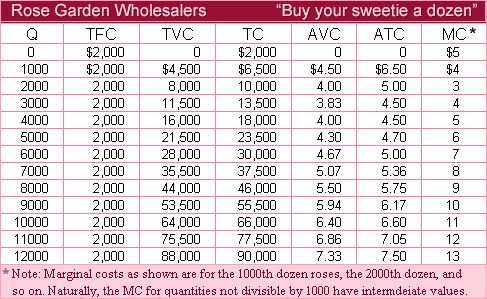
When the wholesale price P = $4 per dozen roses, it purely competitive increased farm maximizes profit through producing ___ dozen roses at a total (profit /loss) of $___. (1) zero; loss; $2000. (2) 2000; loss; $1500. (3) 3000;profit; $1500. (4) 4000; profit; $4,500. (5) 4000; profit; $2,000.
676_Profits and Losses.png

How can I solve my Economics problem? Please suggest me the correct answer.

   Related Questions in Microeconomics

  • Q : Efficient purely competitive market in

    When there are no externalities, in that case a purely competitive market in equilibrium is efficient since: (w) P = AC = MC. (x) total revenue equals total cost [TR = TC]. (y) P = MSB = MSC = MC. (z) MSB = MSC = MR > P.

  • Q : Changes in price influencing supply

    Describe how changes in the prices of other products influence the supply of a specific product.

  • Q : Emerging natural monopoly A monopoly

    A monopoly will come out naturally when: (w) the government relaxes antitrust laws. (x) economies of scale are large relative to market demand. (y) variable costs are huge relative to fixed costs. (z) variable costs rise as output expands.

  • Q : Problem on demand-Purchasing goods I

    I have a problem in economics on demand-Purchasing goods. Please help me in the following question. The quantity of good consumers will purchase beneath different conditions are termed as consumer: (i) Requirements. (ii) Entitlements. (iii) Wants. (iv

  • Q : Problem on blue collar workers I have a

    I have a problem in economics on Problem on blue collar workers. Please help me in the following question. The labor unions have tended to be very successful in organizing: (i) White collar workers. (ii) Blue collar workers. (iii) Professionals. (iv) Clerical workers.

  • Q : Problem on Buyers market I have a

    I have a problem in economics on Buyers market. Please help me in the following question. The buyer’s market is a market in which: (1) Queuing to secure goods is very common. (2) The present market price is beneath equilibrium. (3) Quantity dema

  • Q : Minimizes average cost of output When a

    When a monopolist maximizes profit and charges a price equivalent to average cost, in that case the firm: (i) is producing at the minimum point on its marginal cost curve. (ii) also charges a price equal to marginal cost. (iii) is pro

  • Q : Marginal cost curve in market power

    Above the minimum average variable cost curve, the marginal cost curve is not the supply curve of a monopoly since, unlike purely competitive firms, firms along with market power: (w)

  • Q : Unitarily elastic demand by fixing all

    A monopolist who does not price discriminate, that is: (w) cannot maximize profit by producing where demand is unitarily elastic. (x) will maximize profit where demand is unitarily elastic when all costs are fixed. (y) will maximize profit where deman

  • Q : Effect of minimum wage laws in

    The Minimum wage laws might efficiently raise employment: (i) When the set wage value surpasses labor market equilibrium. (ii) In industries of profoundly exercised monopsony power. (iii) In no condition; higher minimum wage floods the labor supply and lower minimum w