--%>

Maximizes profit at total economic of profit or loss

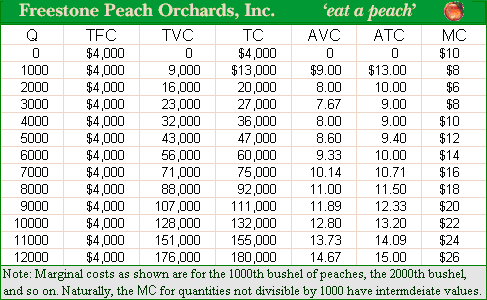
When the wholesale price P = $8 per bushel of peaches, it purely competitive peach orchard maximizes profit via producing ___ bushel of peaches at a total economic of profit or loss of $___. (i) zero; loss; -$4,000. (ii) 3000; loss; -$3,000. (iii) 3000; profit; $3,000. (iv) 4000; profit; $9,000. (v) 4000; profit; $4,000.
174_Profits and Losses1.png

Can anybody suggest me the proper explanation for given problem regarding Economics generally?

   Related Questions in Microeconomics

  • Q : Determine total cost of

    This profit-maximizing competitive firm's total cost as TC=TFC+TVC, as in demonstrated figure can be calculated as area: (i) 0P3fq4. (ii) P2P1de. (iii) P3P2ef. (iv) 0P<

  • Q : Illustration of Substitution Effect

    Sally is very rich that money hardly matters to her, although when the price of JIF chunky peanut butter doubled Sally switched to Peter Pan chunky peanut butter. This alters is an example of the: (1) Income effect. (2) Payback effect. (3) Substitution effect. (4) Pri

  • Q : Personal discrimination Personal

    Personal discrimination: (1) may impede economic discrimination. (2) fosters wage, employment, occupational, and human capital discrimination. (3) causes housing prices to exceed levels affordable by the poor. (4) is the only cause of occupational dis

  • Q : Average cost of producing level of

    When the hourly wage rate (w) of $15 and the hourly price of capital (r) of $75, the average cost of producing any specified level of output into the long run will be minimized where: (1) MPPL = MPPK. (2) MPPL/MPPK =

  • Q : Isoquants and isocost lines By using

    By using isoquants and isocost lines, illustrates graphically that rise in y will result in a decline in the quantity demanded of x1 and also illustrates that rise in the price of x1 will result in a reduction in the quantity demanded of x1<

  • Q : Real interest rate in saving and

    When the real interest rate : (w) is low, there are greater incentives to borrow and fewer incentives to lend. (x) is low, there are greater incentives to lend and fewer incentives to borrow. (y) equals the nominal interest rate + the expected rate of

  • Q : Elimination of discrimination In the

    In the following diagram, the elimination of discrimination is best depicted by: 1) a move from C to E. 2) an inward shift of the production possibilities curve. 3) a move from A to D. 4) a move from E to C.

    Q : Industry demand curve identity

    Babble-On maintains world-wide patents for software which translates any of 314 spoken languages within text, along with automatic audio and text translations within any of the other three-hundred-thirteen languages. When Babble-On is a pure monopoly, such firm confro

  • Q : Changes in total revenue by price falls

    When the price falls along such demand curve for pizza, in that case total revenue: (w) falls. (x) rises, then falls. (y) rises. (z) does not change.

    Q : Comparing income and wealth As

    As comparing income and wealth: (w) differences in their distributions reflect economic discrimination precisely. (x) wealth is a flow variable, whereas income is a stock variable. (y) inheritance explains income differences more totally than wealth d