--%>

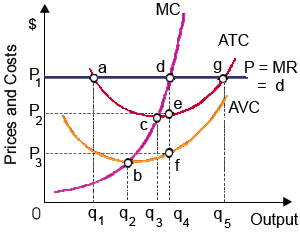
Determine total cost of profit-maximizing competitive firm

This profit-maximizing competitive firm's total cost as TC=TFC+TVC, as in demonstrated figure can be calculated as area: (i) 0P3fq4. (ii) P2P1de. (iii) P3P2ef. (iv) 0P2eq4. (v) aced.
1406_Total Revenue1.png

Hello guys I want your advice. Please recommend some views for above Economics problems.

   Related Questions in Microeconomics

  • Q : Determine marginal revenue and marginal

    While this firm maximizes economic profits, in that case marginal revenue and marginal costs would be: (1) $4 per unit. (2) $6 per unit. (3) $8 per unit. (4) $10 per unit. (5) $12 per unit.

  • Q : Stabilization function Choose the right

    Choose the right answer of thefollowing problem. In performing its stabilization function, it may be appropriate for the nation's central bank (the Federal Reserve in the United States) to take actions to: A) increase taxes to reduce inflation. B) increase interest ra

  • Q : Problem on Monopsony I have a problem

    I have a problem in economics on Monopsony. Please help me in the following question. The monopsonist is a price: (1) Taker as a buyer. (2) Taker as a seller. (3) Maker as the seller. (4) Maker as the buyer. Choose

  • Q : Greatest strategy for maximizing profit

    Monsieur Cournot contains a monopoly on an artesian well from that flows tasty spring water reputed to have medicinal properties. To ignore incurring any variable costs, he is adamants that customers bring their own pails also fill th

  • Q : Spending pattern for maximizing utility

    The consumer maximizes utility if spending patterns cause: (1) Level of net utility to increase each time purchases are modified. (2) Marginal utilities of each and every good consumed to be equivalent. (3) Principle of corresponding marginal utilities per dollar to b

  • Q : Problem on diminishing returns I have a

    I have a problem in economics on Problem on diminishing returns. Please help me in the following question. The principle of diminishing marginal utility is a contrast of the law of: (1) Comparative consumer benefit. (2) Diminishing returns. (3) Effective explanation.

  • Q : Economies of Scope problem In the year

    In the year 1960s, suburbanites start to landscape by employing bark which had formerly been discarded whenever Clear-Cut Forestry Products turned logs to lumber whereas decimating old-growth forests. The extra operating revenue to Clear-Cut from selling bags of bark

  • Q : Separation of the Economic Functions

    Separation of ownership or stockholders by control (management) into modern giant corporations tends to divide the economic functions of: (w) capitalists. (x) union leaders. (y) entrepreneurship. (z) bureaucrats. I

  • Q : Increasing-cost industries average

    Within increasing-cost industries average there are: (w) production costs fall as output increases. (x) production costs rise as the number of firms in the industry grows. (y) production costs rise when the number of firms into the industry falls. (z)

  • Q : When would transaction cost be zero All

    All transaction costs would be zero when: (1) Congress required current prices to be cut by eighteen percent. (2) market information and transportation were both costless. (3) market prices were legally restricted to production costs. (4) inflation we